Common Plunge Pool and Small Pool Dimensions
There's no single standard size. The right dimensions depend on your lot shape, how you plan to use the pool, and which features matter most. Popular configurations in Tampa Bay include:
- 10' x 16' plunge pool: Ideal for cooling off and exercise. Typically 4 to 6 feet deep throughout. Minimal surface area, maximum function.
- 12' x 14' cocktail pool: Balanced design for lounging and socializing, often with a tanning ledge or bench seating. Depth runs 3.5 to 5 feet.
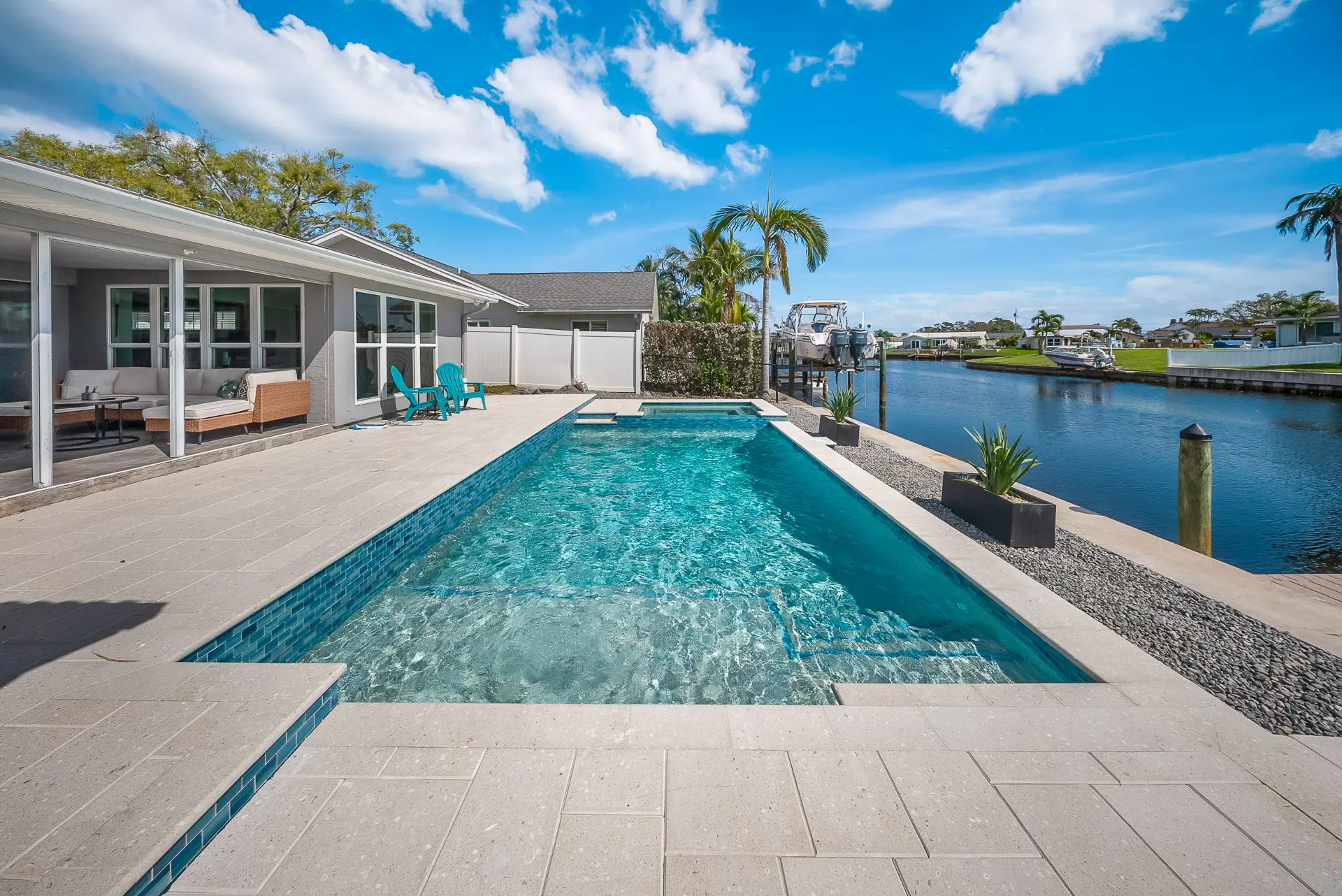
- 8' x 24' lap pool: Narrow footprint built for fitness. Works well in side yards or long, skinny lots. Usually 3.5 to 4 feet deep.
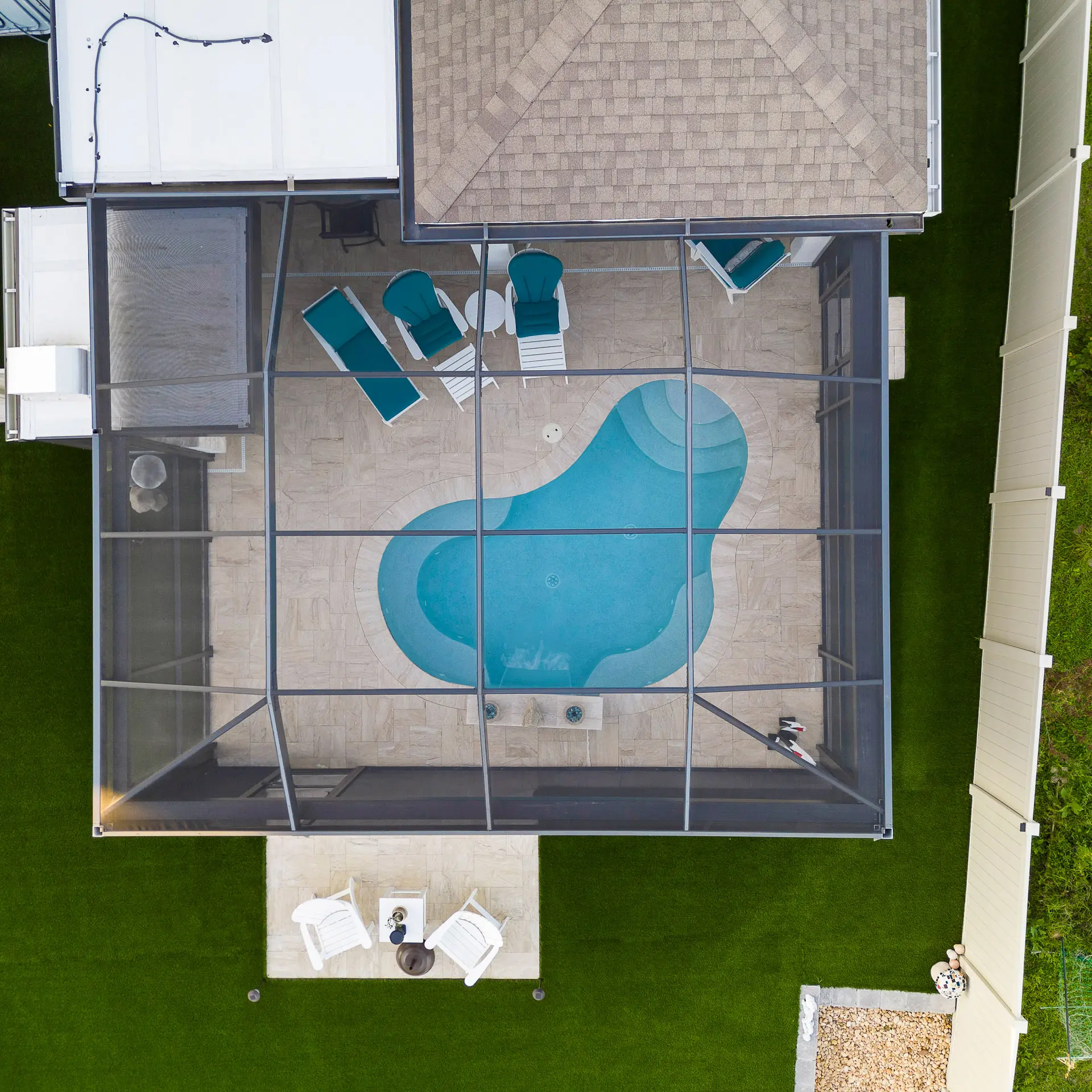
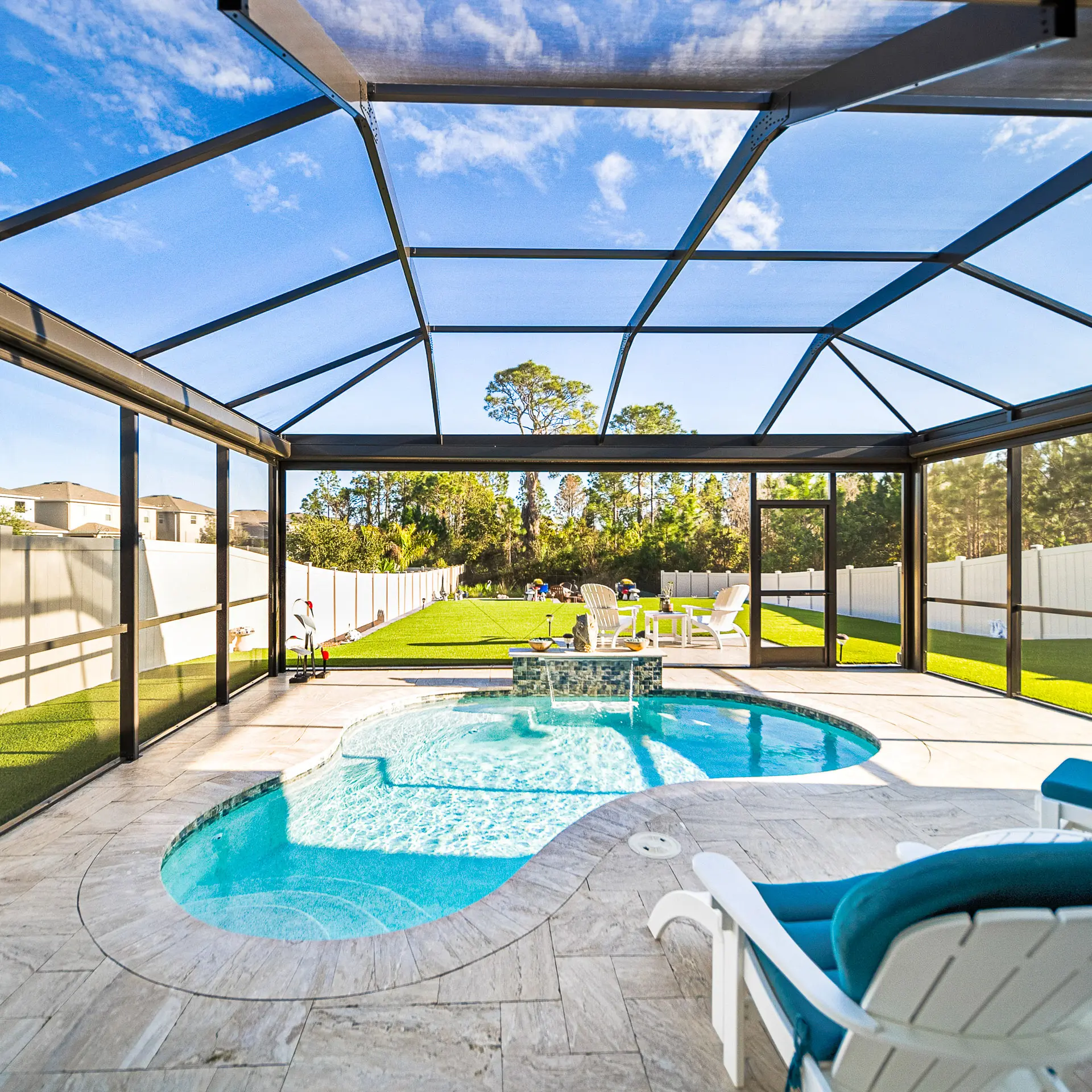
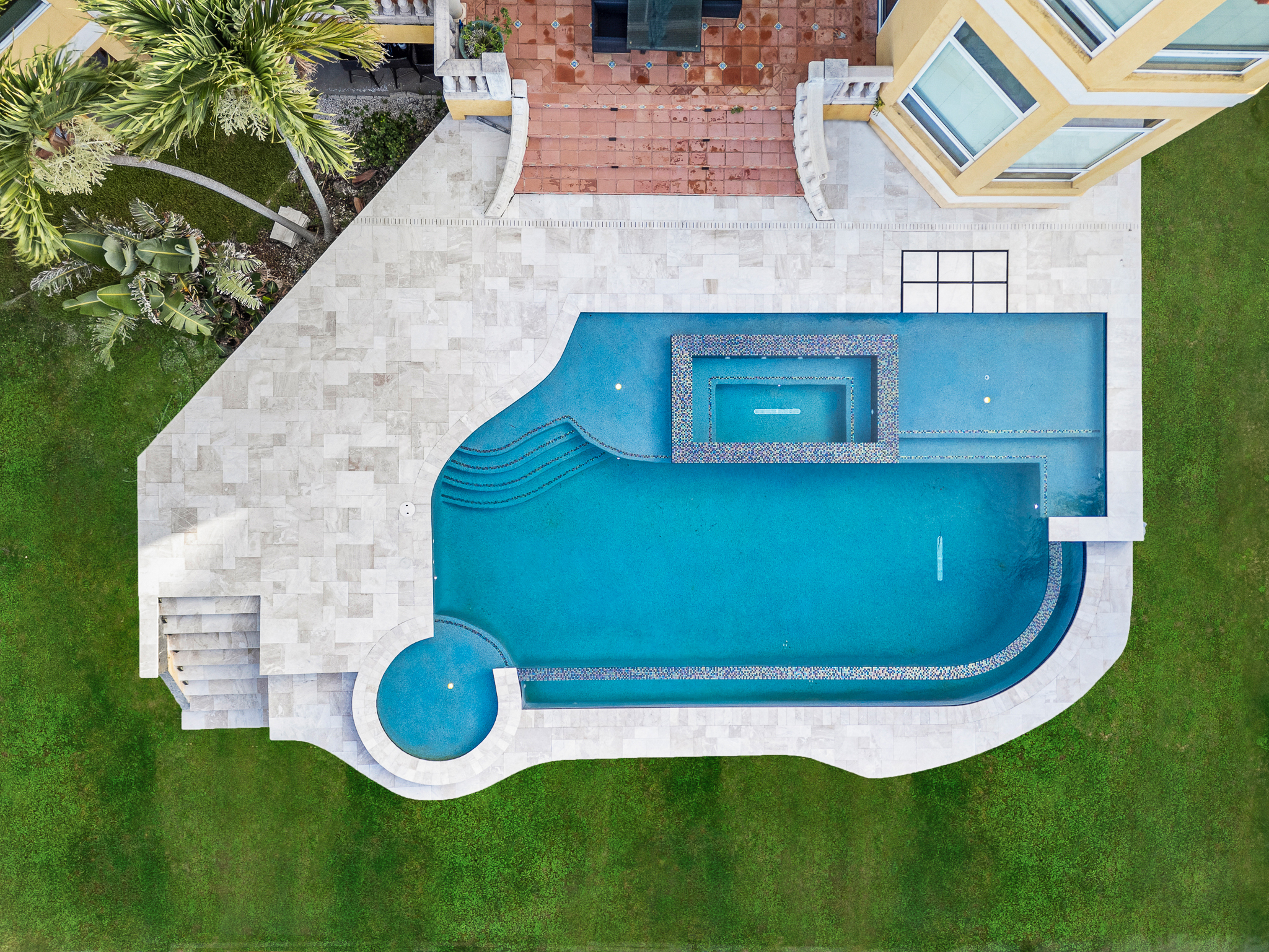
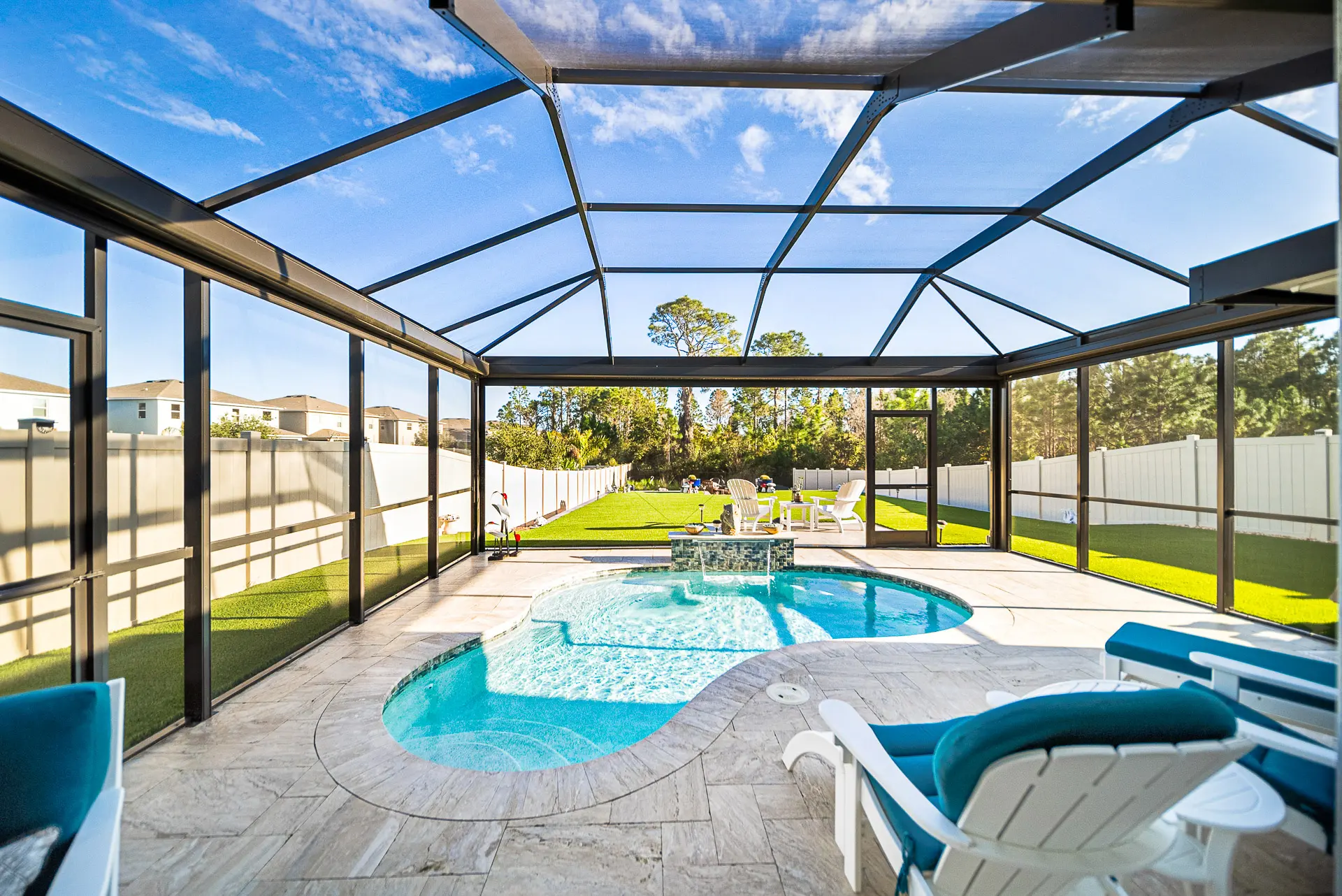
- 9' x 17' freeform: A custom shape that fits irregular lots, with room for curves, steps, and integrated spa seating.
These are starting points, not templates. If your lot fits an 11' x 19' pool, we design an 11' x 19' pool. If you need a kidney shape to work around a tree, we engineer it. Custom concrete means no compromise between what you want and what fits a mold.
Design Options for Compact Spaces
A smaller footprint doesn't limit your options. Custom concrete pools offer the same materials, finishes, and features at any size. The difference is how those elements are arranged within a tighter layout.
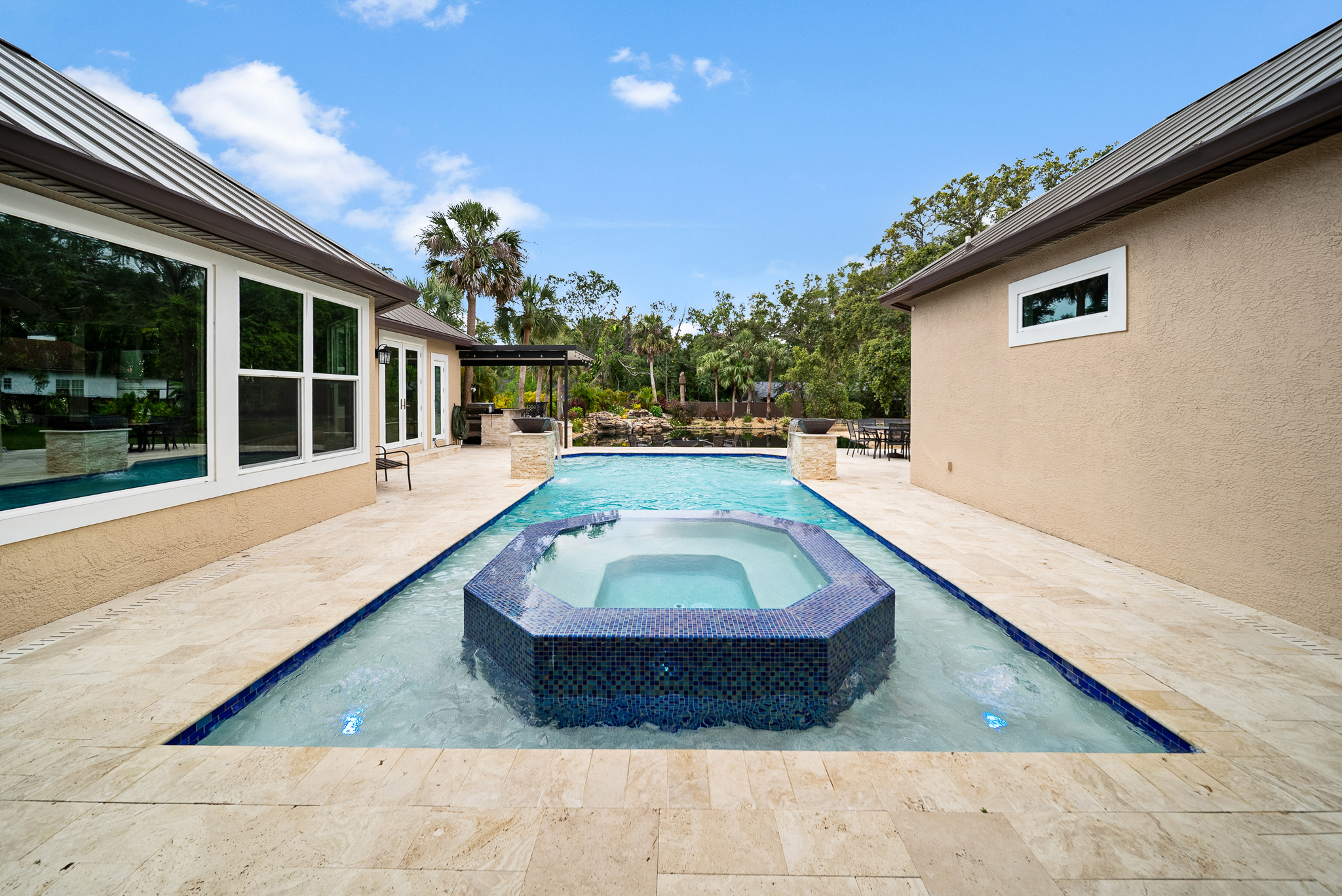
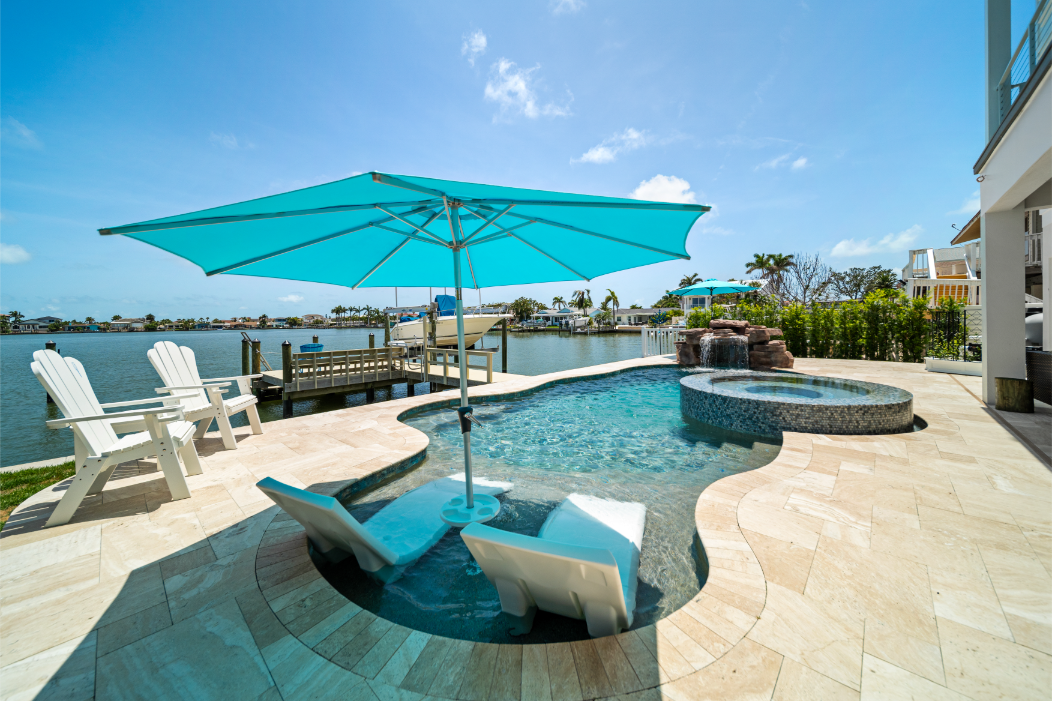
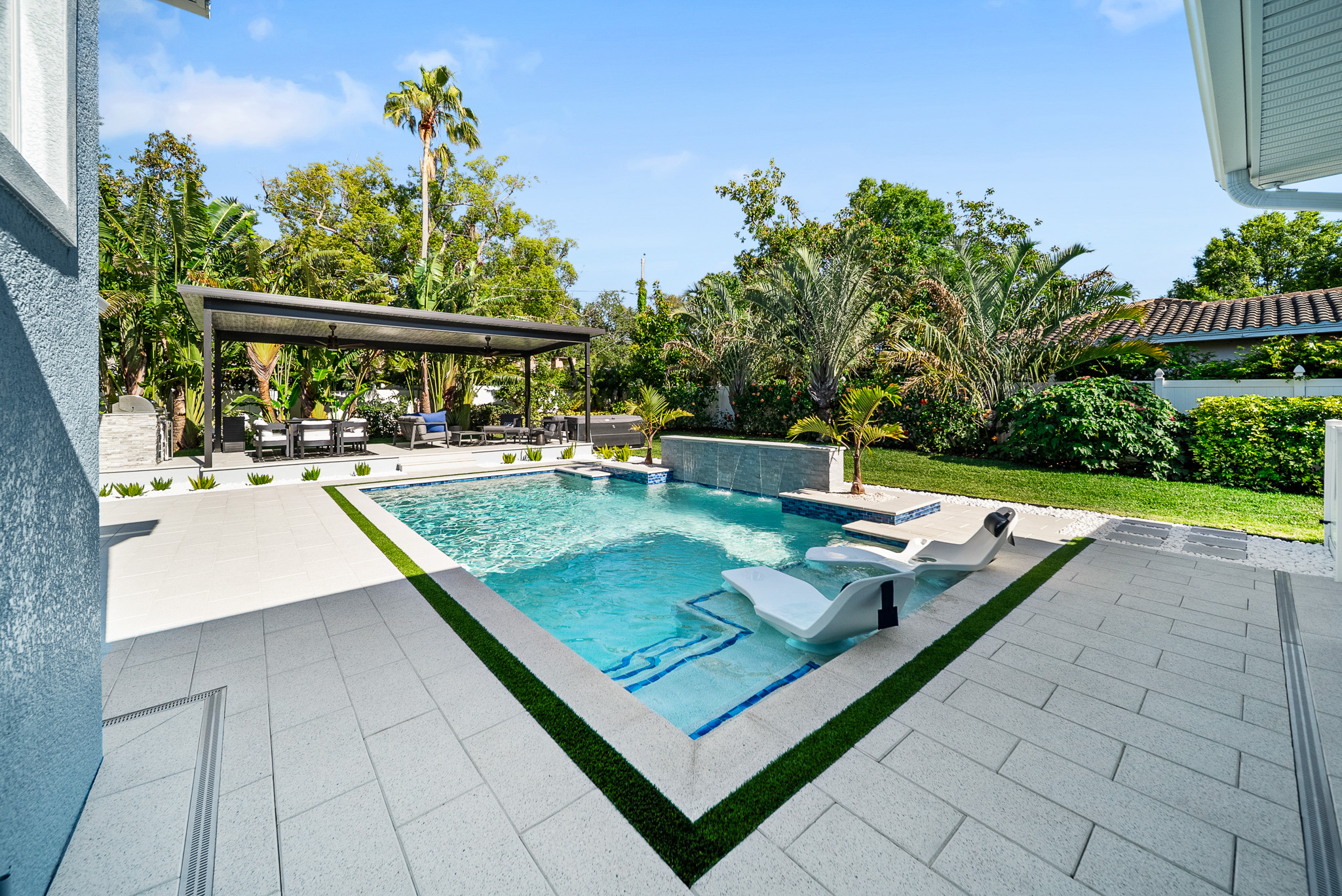
Tanning ledges (also called sun shelves or baja benches) create shallow lounging areas perfect for reading or watching the kids. They typically measure 8 to 12 inches deep and can run along one side or corner. Built-in bench seating adds comfortable resting spots without eating into swimming space. Some homeowners add raised bond beams or negative edges to visually expand the pool and create a modern, resort-style look.
Water features work beautifully in compact designs. Deck jets, scuppers, spillover spas, and bubblers add movement and sound. Hydrotherapy jets turn a plunge pool into a place to loosen up after a workout, and a heater makes it usable year-round, even on Florida's handful of genuinely cold mornings. LED lighting transforms the pool at night, and automation lets you control temperature, lighting, and features from your phone.
Finishes range from classic plaster to premium aggregate options like pebble, quartz, or glass bead. Tile and coping choices define the pool's character, from natural stone and travertine to modern porcelain. Every material decision affects both looks and long-term maintenance, and we walk you through the trade-offs during design.
The key to a great small pool is prioritization. Decide what matters most: depth, surface area, an integrated spa, or a tanning ledge. We help you choose based on how you'll actually use the space, not what looks good in a photo.
Who Plunge and Small Pools Are Ideal For
Urban and infill lots: Homes in South Tampa, St. Petersburg, and older Tampa Bay neighborhoods often have compact yards dominated by the house itself. A small pool maximizes usable outdoor space without violating setbacks.
Side yard installations: Narrow side yards along the length of the home can hold lap pools or linear designs. These spaces are usually wasted, and they make surprisingly private retreats.
Couples and small families: If you're not hosting big pool parties, a smaller pool focused on relaxation and exercise often fits your life better than a large one.
Lifestyle-focused designs: Morning laps, evening cool-downs, a visual centerpiece for entertaining. If that's the goal, a big pool isn't necessary. Small pools deliver the experience with less maintenance and lower operating costs.
Secondary outdoor features: Homeowners who want an outdoor kitchen, fire feature, or serious landscaping often choose a smaller pool to preserve yard space for everything else.
Custom Concrete vs. Fiberglass and Prefab Options
Fiberglass pools arrive as a single molded shell craned into an excavated hole. Installation is fast, often days. The trade-off is design flexibility: you pick from a catalog of preset shapes, and if the manufacturer offers a 12' x 24' rectangle but your lot fits a 13' x 22' better, you make the catalog work or look elsewhere. Fiberglass also maxes out around 16 feet wide due to transport limits.
Prefab and container pools are even more restrictive. They arrive finished and drop into place in hours. You get exactly what ships, nothing more.
Custom concrete pools are built in place using shotcrete, concrete applied over an engineered steel framework. This is how Pool Perfection builds every pool, and it allows complete freedom in shape, depth, and features. We can match your exact lot dimensions, work around trees and utilities, and integrate spas, tanning ledges, and seating into one cohesive design.
Concrete construction takes longer than dropping in a shell, and concrete surfaces get resurfaced every 10 to 15 years. In exchange, you get a pool engineered for your space and your life, not adapted from a catalog.
What a Plunge Pool Costs in Tampa Bay
One of the first questions we get from homeowners is what a plunge pool actually costs. Most of our plunge pool builds land above $55,000. Larger small-pool designs with integrated spas, raised walls, premium finishes, or extensive decking can run higher.
A few factors move the number:
- Size and depth: More volume means more concrete, plumbing, and finish material. Deeper pools need more excavation and structure.
- Features and complexity: Integrated spas, tanning ledges, raised walls, and negative edges add engineering and labor. A simple rectangle costs less than a multi-level freeform.
- Finish materials: Standard plaster is the most economical surface. Aggregate finishes like pebble, quartz, or glass bead add $3,000 to $10,000 depending on the product.
- Equipment and automation: Variable-speed pumps, saltwater systems, heaters, and full automation cost more up front but usually lower operating costs.
- Site conditions: Tight access, rocky soil, or a high water table adds excavation and labor.
You'll see an itemized estimate during your free design consultation, so you know exactly what you're paying for and where you can simplify. No surprises.
Timeline and Construction Process
Every project follows the same structured path from design to swim day, on an efficient, organized timeline that depends on the scope of your build. Here's what to expect:
Design consultation: We meet, review your property, and explore options, then deliver a 3D rendering and itemized proposal. Usually 1 to 2 weeks depending on complexity and feedback speed.
Permitting and approvals: We handle building permits, HOA approvals, and inspections. Tampa Bay permitting varies by jurisdiction, typically 2 to 4 weeks.
Excavation and layout: The site is marked, utilities located, and the hole dug to the engineered design. Plumbing goes in. Usually 3 to 5 days.
Steel and shotcrete: Rebar creates the structural framework, then the shotcrete shell is applied and cured.
Tile, coping, and finish: Waterline tile is set, coping installed, and the interior surface applied.
Decking and final details: Decking goes in, equipment is connected, lighting tested. The pool is filled, balanced, and started up, and final inspections are completed.
You get a detailed project schedule at kickoff and updates at every stage, so you always know what's next.
Tampa Bay Considerations for Small Pool Design
Building a pool here means navigating local codes, Florida weather, and site-specific quirks. We've built over 1,800 pools across the region and know the terrain.
Setback requirements: Local zoning dictates how close a pool can sit to property lines, homes, and septic systems. Compact lots take careful planning. We verify setbacks during design so your pool fits legally.
Permitting and inspections: Every pool needs permits and inspections at multiple stages: layout, steel, plumbing, electrical, and final. We coordinate all of it.
Soil and drainage: Florida's sandy soil drains well but can shift during excavation, and some areas hide rock, clay, or a high water table. We evaluate conditions during the site visit and engineer accordingly.
Hurricane and wind resistance: Florida pools must meet structural standards built for hurricane zones. We build to exceed Florida Building Code requirements.
Coastal proximity: Homes near saltwater face extra corrosion considerations. Stainless components and saltwater-compatible systems extend equipment life.
We bring the same process to our West Orlando service area, including Windermere, Winter Garden, and the surrounding communities.
Small Pools, Plunge Pools, and Cocktail Pools: What's the Difference?
The terms get used interchangeably, but they describe different design approaches, and knowing the difference helps you describe what you want during your consultation.
Small pools is the broad category: any compact inground pool, typically 200 to 400 square feet. It includes plunge pools, cocktail pools, lap pools, and compact freeform designs.
Plunge pools emphasize depth over surface area. They're built for cooling off and quick exercise rather than swimming laps, typically 5 to 7 feet deep with a smaller footprint like 8' x 12' or 10' x 16'. Some include jets for resistance swimming or massage.
Cocktail pools prioritize social space over depth. They offer more surface area (often 10' x 14' to 12' x 16') but stay shallow enough for comfortable standing and conversation, usually 3.5 to 5 feet.
All three are built with the same custom concrete, so you can blend them. A 12' x 18' pool with a shallow lounging end and a deeper plunge section takes the best of both. We design around how you'll use the space, not rigid categories.