.jpg)

Introduction: The Illusion That Redefined Luxury Living
Infinity pools did not start in backyards. They started in places built around the view.
Today, they show up in custom homes where design matters more than just having a pool. For the right homeowner, an infinity edge changes how the entire outdoor space feels. The water does not stop at the pool. It blends into the land beyond it.
An infinity pool works by letting water flow evenly over one edge into a hidden basin below. From the right angle, that edge disappears. This only works on certain properties, like waterfront lots, elevated homes, or yards with natural changes in height. Flat yards without a view rarely benefit the same way.
This is not a decorative upgrade. Infinity pools are engineered systems. Water flow, site conditions, and construction precision all matter. When done right, the result feels effortless. When done wrong, the illusion breaks fast.
This article is for homeowners considering a custom pool who want to understand how infinity pools work, when they make sense, and what to think through before committing.
.jpg)
How an Infinity Pool Actually Works
Infinity pools look calm and simple. What you do not see is the amount of planning required to make them feel that way.
What makes an infinity pool work is not one feature. It is several systems working together in balance. When even one part is off, the illusion breaks. Water gets noisy. The edge looks uneven. The pool stops feeling relaxing.
Here is how the system really works.
The Overflow Edge
The disappearing edge is the heart of an infinity pool.
One side of the pool is built slightly lower than the rest. As water reaches that edge, it spills over in a thin, even sheet. From the right angle, the edge fades away. The water looks like it never stops.
Most residential infinity pools use one overflow edge. This is ideal when the goal is to frame a view, like a lake, the ocean, or open land beyond the property.
Some pools allow water to spill over all sides. These are called perimeter overflow pools. They create a very clean look, but are more complex and cost more to build. In homes, a single infinity edge is usually the better choice.
Precision matters here. The edge must be perfectly level. Even small height differences can cause uneven flow or unwanted noise. This is where experience shows.
The Catch Basin (Balance Tank)
The water flowing over the edge does not disappear.
It drops into a hidden basin below the pool, often called a catch basin or balance tank. This basin is usually tucked out of sight under the deck or behind the pool wall.
The basin does two important jobs. It stores overflow water and helps keep the main pool level stable. When people get in the pool or when it rains, extra water moves into the basin instead of raising the pool level.
If the basin is too small, problems show up fast. Water levels fluctuate. Pumps work harder. In some cases, water can spill where it should not. Basin size and placement are planned based on pool size, edge length, and how the pool will be used.
Filtration and Water Return
Water collected in the basin is filtered and pumped back into the main pool. This runs continuously while the pool is on.
Pump sizing is critical. If the pump is too weak, the edge breaks, and the water sheet looks uneven. If it is too strong, the water becomes loud and turbulent. Neither feels right.
Well-designed systems create a steady, quiet flow. You should see the water moving, but never notice the mechanics behind it.
Builder Insight: Water Loss Myths
A common concern is water waste.
Infinity pools do not constantly lose water the way many people assume. Most of the water that flows over the edge is reused through the basin system. Real water loss comes from evaporation, splash-out, and wind.
Wind matters more than most homeowners expect. Strong gusts can push water over the edge faster than it can be returned. Longer edges move more water. Taller drops require more energy to pump water back up. These factors are planned for during design, not after construction starts.
Design Decisions That Affect Cost, Maintenance, and Longevity
Infinity pools feel effortless when they are done right. That feeling comes from smart design choices made early, not from added features later.
The way the pool sits on the land, the length of the edge, and the materials used all affect how much the pool costs, how easy it is to maintain, and how well it holds up over time.
Site Conditions
The land does a lot of the work in an infinity pool.
Sloped or elevated lots are ideal. Water naturally moves toward the catch basin, which reduces stress on the system. The drop also helps the edge visually disappear, making the effect stronger. These sites often need less structural support along the edge wall.
Flat lots can still work, but they require more engineering. Raised-edge walls, deeper basins, and added steel are common solutions. These increase upfront cost and can add complexity later if they are not designed carefully.
Soil conditions are just as important. Soft or shifting soil needs reinforcement before construction begins. Without proper preparation, small movements can lead to cracks or uneven water flow over time. This is why soil testing is often part of the design process for high-end pools.
Edge Length and Orientation
The length of the infinity edge has a direct impact on cost and performance.
Longer edges move more water. That means larger basins, higher flow rates, and more precise leveling. Each extra foot increases material, labor, and energy use. Longer edges also increase evaporation since more water is always in motion.
Orientation matters too. Edges aimed at open views look dramatic, but they are often exposed to wind. Wind pushes water over the edge faster, which increases splash-out and evaporation. In windy areas, designers may shorten the edge, raise it slightly, or adjust its direction to keep the system balanced.
Shorter edges are easier to control and often deliver the best mix of visual impact and efficiency for residential homes.
Materials and Finish Choices
Finish choices affect how water behaves and how much care the pool needs.
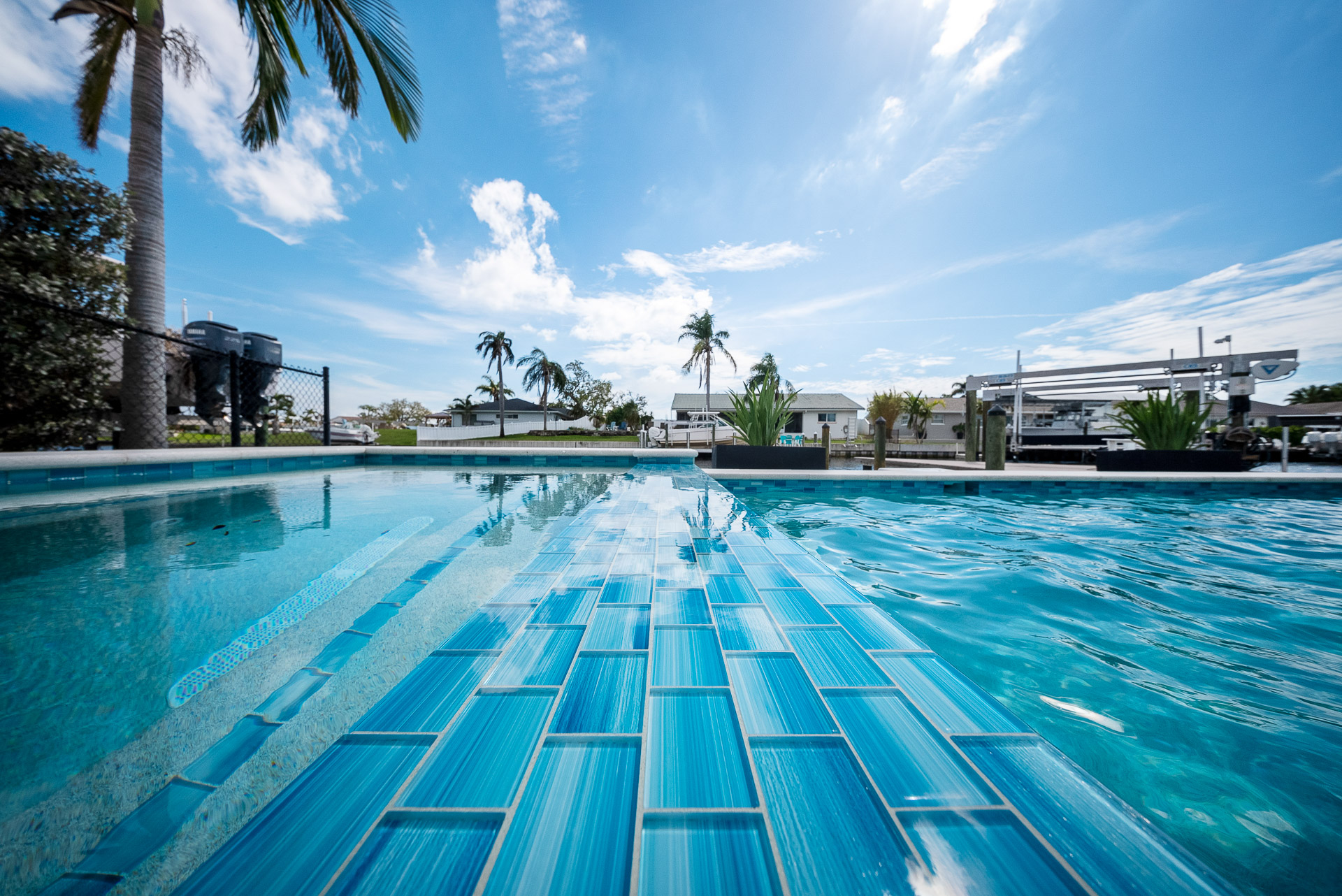
Tile creates a smooth surface that helps water flow evenly over the edge. Glass tile is a common choice because it resists staining and keeps a clean water line. Darker colors can also make the water appear deeper and calmer.
Stone and coping materials need careful selection. Rough or uneven stone can break the water sheet and create noise or splashing. Some natural stones absorb water and require regular sealing, which adds maintenance over time.
Edge detailing is critical. Clean, sharp lines allow water to spill evenly. Poor detailing leads to dripping, streaking, or broken flow that pulls attention away from the view.
Durable materials cost more upfront but reduce long-term maintenance. This matters even more in warm or coastal climates where heat, salt, and minerals take a toll.
Design Tip: When an Infinity Edge Adds Real Value
Infinity edges add the most value when they frame a strong view or work with natural elevation. In these cases, the pool becomes part of the home’s architecture, not just a feature in the yard.
On flat lots with limited views, an infinity edge may look impressive but offer less practical benefit. A standard pool or partial edge can deliver a clean look with lower cost and simpler upkeep.
The best designs are not driven by trends. They balance appearance, performance, and long-term use from the start.
What Homeowners Should Expect
A well-designed infinity pool feels calm when it is running the way it should. That calm comes from steady water movement, basic oversight, and a system designed to respond to its environment.
Infinity pools are reliable, but they are not hands-off. Knowing what normal operation looks like helps homeowners spot small issues before they turn into bigger ones.
Day-to-Day Operation
When an infinity pool is working properly, water flows evenly over the edge in a thin, steady sheet. The sound should be soft and consistent. Loud splashing or uneven flow usually means the water level or pump speed needs adjustment.
The edge should look uniform from end to end. There should be no dry sections and no heavy streams in one spot. When people enter the pool, water moves into the catch basin. The system then returns water to the pool to bring the level back into balance.
Most homeowners run the infinity edge for set periods each day. Run times often increase when the pool is being used and decrease when it is not. This approach keeps the pool looking right while controlling energy use.
Maintenance and Monitoring
Infinity pools require more attention than standard pools.
The catch basin is the first place debris collects. Leaves, dirt, and other material need to be cleared regularly. If the basin becomes clogged, water flow can become uneven, and the pumps may work harder than they should.
Water levels also need to be checked. If the basin level drops too low, air can enter the system. This can cause noise, shutdowns, or long-term equipment damage. Pumps, sensors, and controls should be reviewed during routine service visits.
These pools are not set-and-forget systems. Regular checks keep the edge smooth and help the equipment last longer.
Climate and Environmental Factors
Heat increases evaporation. In warm climates, water loss is higher, especially with longer edges. Automatic fill systems help maintain proper levels, but they still need monitoring.
Rain affects balance as well. Heavy rainfall sends extra water into the basin. If the basin is undersized, overflow can occur. Proper design accounts for local rainfall patterns from the start.
Seasonal changes also matter. In cooler months, many homeowners reduce run times to limit wear on equipment. During windy periods, adjustments may be needed to manage splash-out and evaporation.
Small adjustments throughout the year protect the system and keep performance consistent.
Builder Insight: Preventing Common Performance Issues
The most common issues seen after installation are uneven flow, loud water noise, and frequent pump cycling. In most cases, these problems trace back to design choices made early, not how the pool is used.
Proper edge leveling, correctly sized basins, and matched pump capacity prevent most issues before they start. When these elements work together, an infinity pool runs quietly and reliably for years.
Conclusion: Is an Infinity Pool Right for Your Property?
Infinity pools are not just about looks. They are engineered systems that depend on careful planning, precise construction, and ongoing care. The disappearing edge only works when water flow, basin size, pump capacity, and site conditions are designed together from the start.
In luxury homes, the most successful infinity pools are not built to chase trends. They are designed to fit the property, support the architecture, and match how the space will actually be used. When done well, an infinity pool becomes part of daily life and long-term enjoyment. When done poorly, it adds cost and maintenance without delivering real value.
Before choosing an infinity edge, homeowners should be honest about their property and their expectations. The land needs to support the design. The system needs attention over time. A clear understanding early helps avoid frustration later.
For homeowners exploring a custom pool and deciding whether an infinity edge makes sense, the next step is a site-specific conversation. Every property is different. The best designs come from understanding the land, the view, and how you plan to live with the pool, not from forcing a feature to fit.
FAQs
Do infinity pools increase home value?
Infinity pools can increase perceived value in luxury homes, especially when they highlight a strong view or a unique property feature. In high-end markets, buyers often see them as a design upgrade rather than just a pool.
That said, value is not automatic. The biggest gains come from good design and proper placement. On properties without views or elevation, the return depends more on build quality and how well the pool fits the home. In average markets, buyer expectations play a bigger role than the feature itself.
Are infinity pools safe for children and pets?
Infinity pools can be safe when they are designed with the household in mind.
Safety depends on several factors, including edge height, visibility, access to the catch basin, and how people move around the pool. Homes with children or pets often require additional planning to balance safety and appearance.
Many homeowners use subtle solutions like barriers, covers, alarms, or controlled access points. When safety is addressed early in the design process, it can usually be handled without taking away from the look of the pool.
Do infinity pools use more energy than standard pools?
Infinity pools often use more energy because the edge system runs longer to maintain water flow. How much more depends on pump efficiency, edge length, and how the system is scheduled.
Modern systems help manage this. Variable-speed pumps, automation, and smart controls allow owners to run the edge only when needed. This keeps energy use in check while still delivering the visual effect when the pool is being enjoyed.
Design a Pool that Stands Apart
Infinity pools reward good planning and punish shortcuts. A guided review of your property can help you avoid costly mistakes and design a pool that feels intentional from day one.