The Most Overused Word in the Pool Industry
Custom Design Requires an Actual Designer
I Don't Start With the Pool Shape
Orientation Changes Everything
Features Need a Reason to Exist
Proportion Matters
Expensive Doesn't Mean Custom
Design the Vision, Then Make It Work
The Best Designs Become Personal
Most Pools Can Be Built. The Question Is Whether They Were Designed.
Frequently Asked Questions About Custom Pool Design
See What a Pool Designed for Your Backyard Looks Like
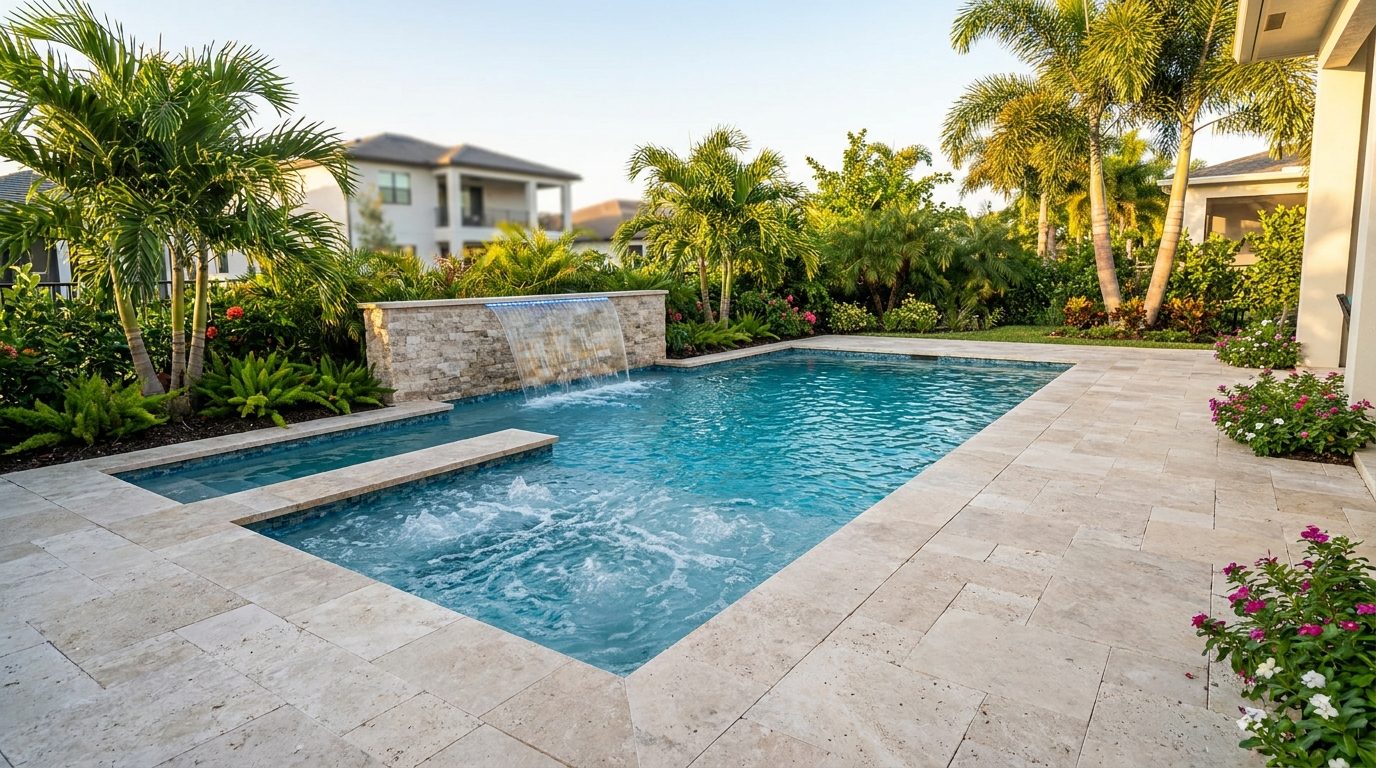
The Most Overused Word in the Pool Industry
Custom pool is probably one of the most overused phrases in the swimming pool industry.
Put a spa on it. Add a sun shelf. Choose a different tile. Maybe add a fire bowl.
Now it's custom.
I don't look at custom pool design that way.
To me, a custom pool isn't defined by how many expensive features you put into it.
A custom pool fits a purpose.
It fits the home. It fits the property. It fits the people who are going to use it.
And when it's done really well, it feels like it couldn't have been designed for anybody else's backyard.
That's custom.
Custom Design Requires an Actual Designer
There is a difference between selling pools and designing them.
A salesperson can sit with a homeowner, ask what size pool they want, select a shape from a library, drag it into the backyard and start adding options.
That's technically a pool design.
It isn't necessarily custom design.
A real designer needs to understand what the homeowner is trying to create and then figure out how to make that vision work within the realities of the property.
That's the part of this job I genuinely love.
Sometimes a homeowner knows exactly what they want.
Other times they know how they want the backyard to feel, but they don't know what the finished design should look like yet.
That's where the designer earns their place in the process.
I Don't Start With the Pool Shape
Before deciding whether the pool should be geometric, free form or anything else, I want to understand the environment around it.
What's the architecture of the house? Where are the major doors and windows? What do you see when you walk into the main living area and look outside? Where does the sun hit the yard? Is there a view we're trying to preserve? What's the elevation doing? Where will people naturally walk? Where will they sit?
Are we incorporating an outdoor kitchen? A covered living area? A fireplace? Landscaping? A screen enclosure?
Those things influence the pool. If you're weighing shapes, our guide to free form versus geometric pools covers the tradeoffs, but the shape decision comes after the site, not before it.
The pool shouldn't be designed in isolation and then dropped into whatever space is left.
Orientation Changes Everything
You can take the exact same pool and rotate it 90 degrees and create a completely different backyard.
Maybe one orientation preserves the view from the house.
Maybe another makes the pool feel disconnected from the patio.
Maybe the spa belongs where you can see it from the primary living space.
Maybe putting it there blocks the view you're actually trying to preserve.
This is where templates get people into trouble.
A shape can be perfectly good.
But a perfectly good pool facing the wrong direction is still the wrong design.
Features Need a Reason to Exist
I love pool features.
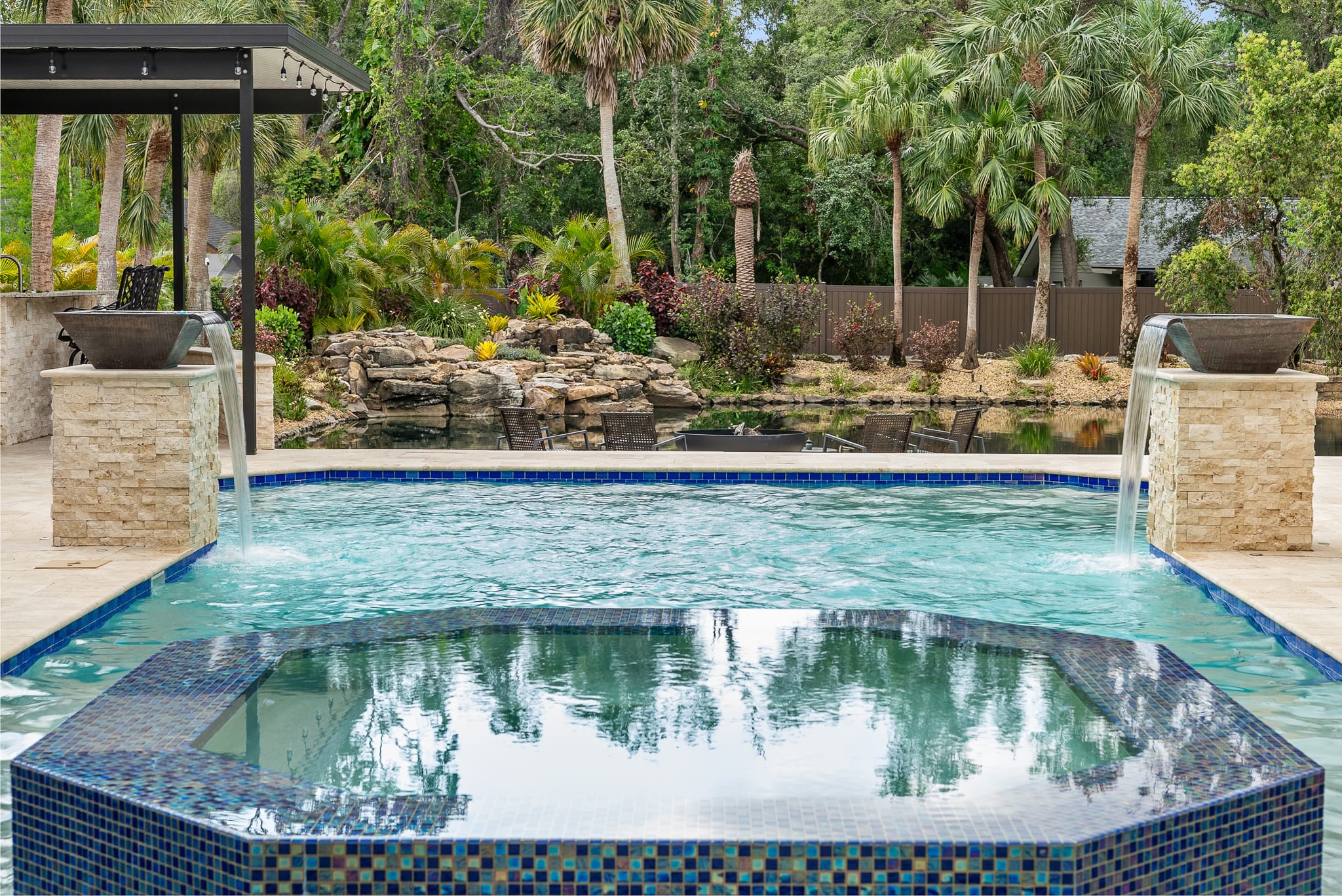
Sun shelves, spas, in pool tables, benches, water features, raised walls and fire elements can completely transform a design.
But I don't think features should be added simply because they're available on the price sheet.
What does the feature do? Who is going to use it? How does it interact with the rest of the pool? Where should it be positioned?
A bench is a great example.
Putting a bench somewhere because there was an empty wall isn't design.
Maybe the bench should face the sunset. Maybe it should put you directly in front of the television. Maybe it's where parents will sit while watching kids on the sun shelf. Maybe it's where the best view of the property is.
The feature isn't custom because it's unusual. It's custom because there's a reason it's there.
Proportion Matters
One of the easiest mistakes in backyard design is trying to fit the largest pool possible.
I don't think that's always the goal.
Water needs space around it. People need somewhere to sit. Furniture needs to fit. You need walking paths. An outdoor kitchen needs enough space to actually function. Landscaping can be part of the design rather than whatever gets squeezed into the remaining corners.
Sometimes making the pool slightly smaller makes the entire backyard significantly better.
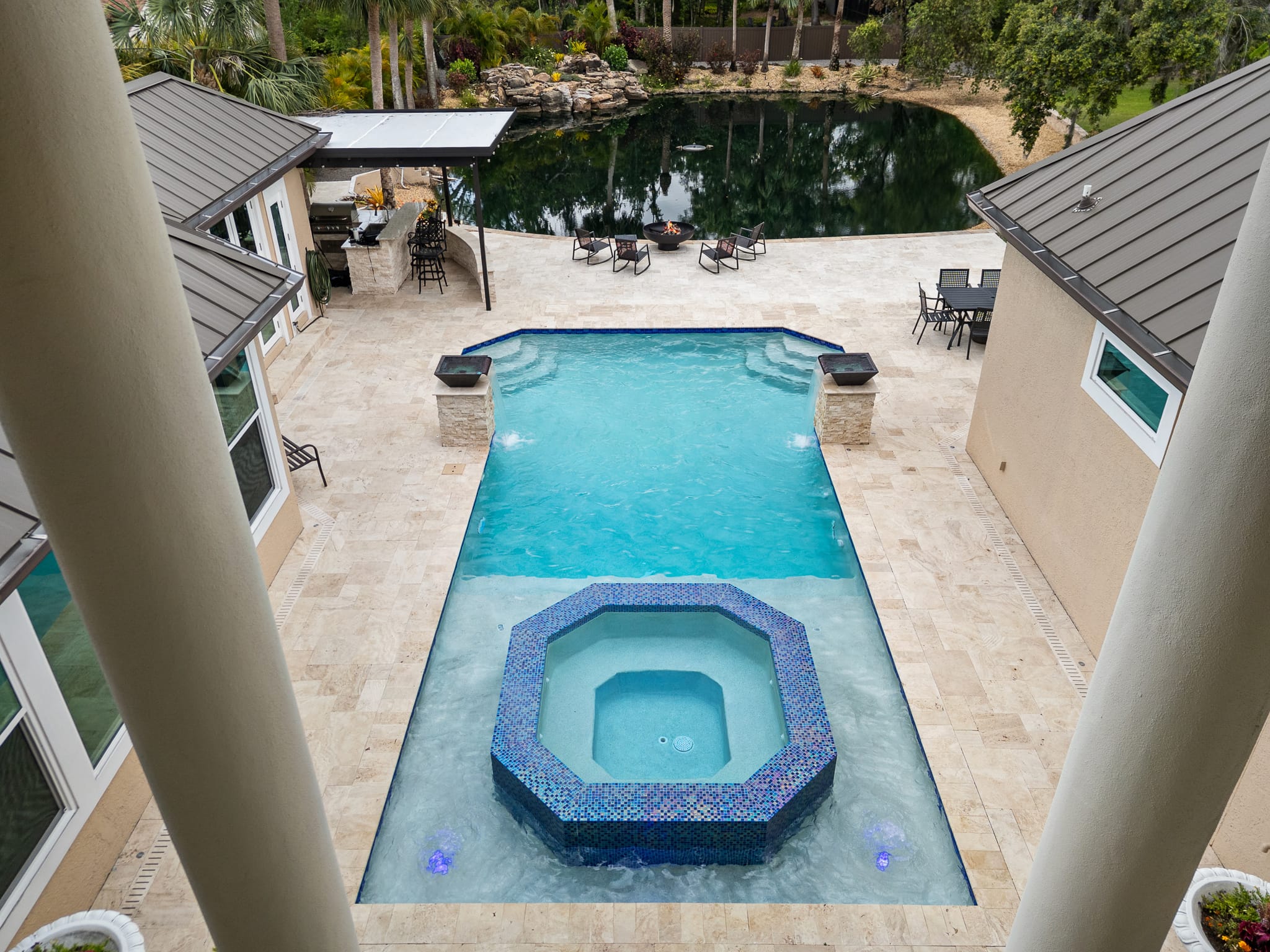
That's why I look at the proportion between the pool, deck, house and outdoor living areas.
We're not designing a pool inside a backyard.
We're designing the backyard. The pool is one of the most important pieces of it.
Expensive Doesn't Mean Custom
You can spend an enormous amount of money on a pool and still end up with a bad design.
And you can build a relatively simple geometric pool that is completely custom.
A clean rectangle positioned perfectly with the architecture of the house, the right materials, properly proportioned deck space and features designed specifically around how the family uses the backyard can be an exceptional custom pool.
It doesn't need six fire bowls to prove it.
Custom isn't a price category.
It's a design process.
Design the Vision, Then Make It Work
Creativity is important in pool design.
But creativity without real world construction knowledge can create problems.
The design still has to work. The elevations have to work. The water needs to circulate, and circulation is governed by real hydraulic standards rather than taste, which is part of why bodies like the Pool and Hot Tub Alliance exist. The equipment needs to support the features. The structure needs to be buildable. People need to be able to move comfortably through the space. Materials need to make sense for the environment.
That's why I think the best pool designers combine three things:
Creativity, training and real world experience.
You need creativity to see something that isn't there yet. You need the training to understand how to design it. And you need enough experience with actual construction to know whether what you're drawing is going to work once somebody has to build it.
My philosophy is pretty simple:
Design the vision first. Then make every part of it work well.
The Best Designs Become Personal
This is probably my favorite part of designing pools.
There are homeowners I've worked with where, after enough conversation, I start to understand exactly what they're trying to create, even when they haven't completely figured it out themselves.
That's when designing becomes really fun.
You can take pieces of what they've told you about their family, how they entertain, what they like visually, how they use their home and what they want their backyard to become, and turn it into something they didn't know how to describe at the beginning.
Then you show them the design.
And occasionally you get that reaction where they see their future backyard for the first time and it completely blows them away.
That's what I think custom design is supposed to do.
Show you something that was designed specifically for you. Not just showing you which template fits.
Most Pools Can Be Built. The Question Is Whether They Were Designed.
There are a lot of ways to fit a swimming pool into a backyard.
That's not particularly difficult.
The challenge is creating the right pool for that backyard and that homeowner.
That's why I don't think custom design starts with "What shape pool do you want?"
I'd rather start with "What do you want this backyard to become?"
Then we figure out the pool.
Because if we've done our job correctly, the finished project shouldn't look like a pool that could have been dropped into any backyard.
It should look like it always belonged in yours.
Frequently Asked Questions About Custom Pool Design
What makes a pool custom?
A custom pool is designed around a purpose. It fits the architecture of the home, the realities of the property and the way the family actually uses the backyard. It is not defined by how many features it has, and adding a spa, a sun shelf and a fire bowl to a library shape does not make a pool custom.
Does a custom pool have to be expensive?
No. Custom is a design process, not a price category. A clean geometric pool positioned correctly against the architecture of the house, with the right materials, properly proportioned deck space and features chosen around how the family uses the yard, can be an exceptional custom pool.
Why does the designer look at the house before the pool?
Because the house and the property determine what will work. Door and window placement, sight lines from the main living area, sun exposure, views worth preserving, elevation and where people naturally walk and sit all influence the pool. Designing the pool in isolation and dropping it into the leftover space is how templates go wrong.
Should I just fit the biggest pool my yard allows?
Usually not. Water needs space around it, people need somewhere to sit, furniture needs to fit, walking paths need room and an outdoor kitchen needs enough space to function. Making the pool slightly smaller often makes the entire backyard significantly better.
Does the orientation of the pool really matter?
A great deal. Rotating the same pool 90 degrees can produce a completely different backyard. One orientation may preserve the view from the house while another disconnects the pool from the patio or puts the spa where it blocks the view you were trying to keep.
How do I know if a builder is actually designing my pool?
Listen to the questions. A designer should be asking about how you use the backyard, what you see from inside the house, where the sun falls, what you are trying to preserve and who will use each feature. If the conversation starts with what shape you want and moves straight to a feature list, that is selling rather than designing.
See What a Pool Designed for Your Backyard Looks Like
The difference between a pool that fits your backyard and one that was dropped into it shows up in the design conversation, long before construction.
Book a free 3D design consultation with a Pool Perfection designer, or call (727) 518-7665. You can also browse the project gallery to see how differently these pools turn out when the property leads the design.