What Does a Pool Cost in Tampa Bay?
The Property Can Affect the Price as Much as the Pool
Access Matters More Than Most Homeowners Realize
Elevation Can Change the Entire Project
Waterfront Pools Deserve Special Attention
Custom Features Can Change the Price Quickly
Decking Is a Major Part of the Budget
Drainage Isn't an Optional Afterthought
Pool Size Matters, But Not as Much as People Think
Why Online Pool Cost Calculators Struggle
So What Should a Pool Cost?
Frequently Asked Questions About Pool Costs
Get an Honest Price for Your Pool
What Does a Pool Cost in Tampa Bay?
One of the first questions almost every homeowner asks me is: "How much does a pool cost?"
It's a fair question.
For a straightforward project in Tampa Bay with relatively flat elevation, good access and a simple design, an inground concrete pool can start around $55,000.
But that number needs context.
I can design two pools with almost identical dimensions and have significantly different construction costs based entirely on the properties they're being built on and the features the homeowners want.
That's why I don't think pool pricing should start and end with square footage.
The better question is: "What is actually involved in building this pool on my property?"
The Property Can Affect the Price as Much as the Pool
Before I'm concerned with fire bowls, water features or interior finishes, I need to understand the property.
What's the access? What's the elevation? Where is the house in relation to the pool? Is the property waterfront? How will drainage work? Do we need to retain soil? Where can equipment go?
Those aren't exciting design questions, but they can have a major impact on construction cost.
A relatively simple pool on a challenging property can cost considerably more to build than a more elaborate pool on an easy one.
Access Matters More Than Most Homeowners Realize
Pool excavation requires heavy equipment.
The amount of access we have to the backyard helps determine the size of the excavator that can be used and how efficiently material can be removed from the site.
If we have wide access, we can use larger equipment and move material efficiently. As access gets tighter, equipment gets smaller. Smaller equipment generally means more labor and more time.
On some properties, excavated material can be loaded and removed efficiently. On others, it must be shuttled from the backyard to trucks positioned elsewhere on the property or the street.
That difference isn't visible in a rendering.
But it can absolutely be visible in the price.
This is why two neighbors building the same pool don't necessarily have the same excavation cost.
Elevation Can Change the Entire Project
Elevation is one of the biggest variables in pool construction.
A flat backyard may require very little additional structural work outside the pool itself.
Change the elevation and suddenly we may need to retain soil, engineer additional structures, build footers or account for drainage differently.
Retaining walls can add tens of thousands of dollars to a project. On some properties, $30,000 or more in retaining work isn't unrealistic.
That's not an "upgrade." It's construction required to make the design work properly on that particular property.
This is also why I'm cautious when someone tries to price a pool from an aerial image or an online calculator.
The computer knows the approximate dimensions of the backyard. It doesn't necessarily understand what's happening vertically.
And in pool construction, what's happening vertically can matter just as much as what's happening horizontally.
Waterfront Pools Deserve Special Attention
Waterfront properties are another category where I don't like one size fits all pricing.
Being on the water doesn't automatically mean every project requires the same structural solution.
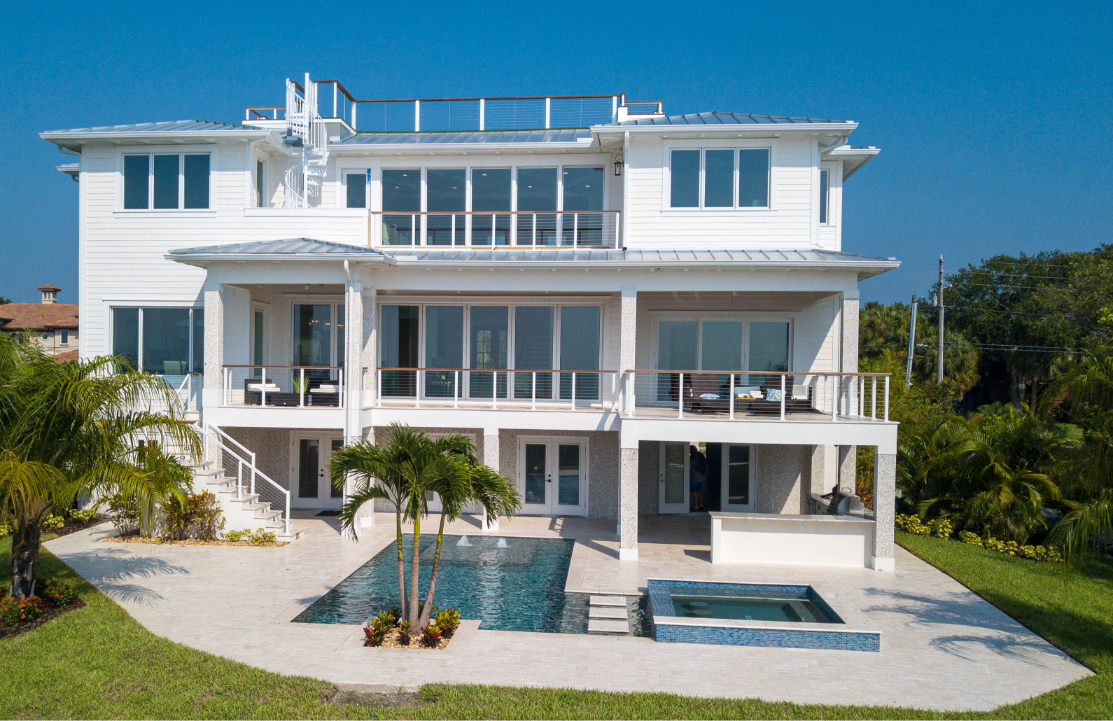
But it does mean I want to pay very close attention to elevation, drainage, soil retention, seawalls and how the deck is being supported.
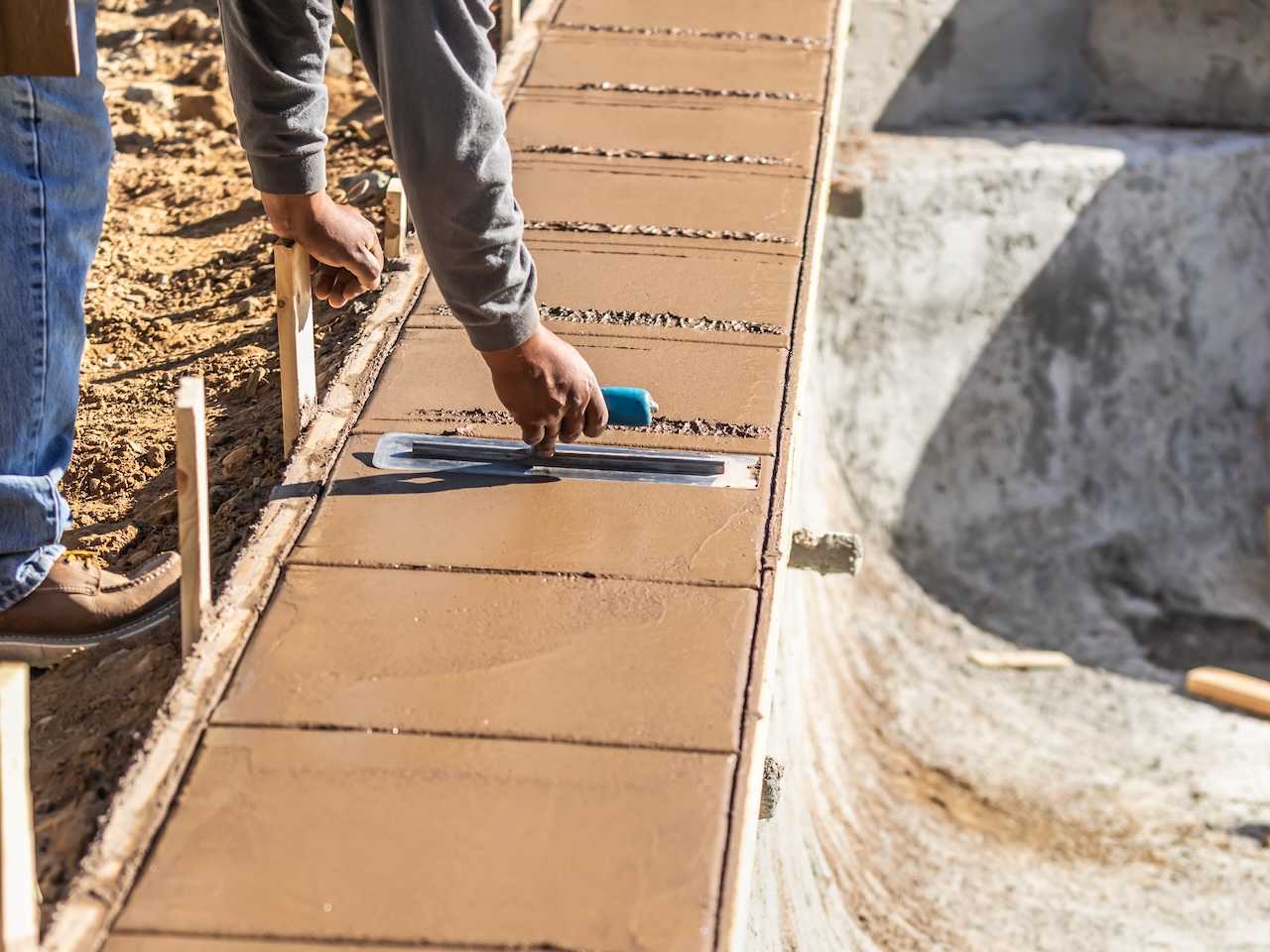
We commonly recommend a concrete footer around the perimeter of paver decking on waterfront properties.
The idea is simple: lock the perimeter of the deck in place and help retain the material supporting it.
Waterfront conditions can contribute to erosion and movement over time. A properly designed footer can help protect the edge of the deck rather than leaving the perimeter dependent entirely on compacted material.
Whether additional retaining structures are required is a separate, property specific engineering question.
The important point is that the design should respond to the site.
Custom Features Can Change the Price Quickly
Then we get to the fun stuff.
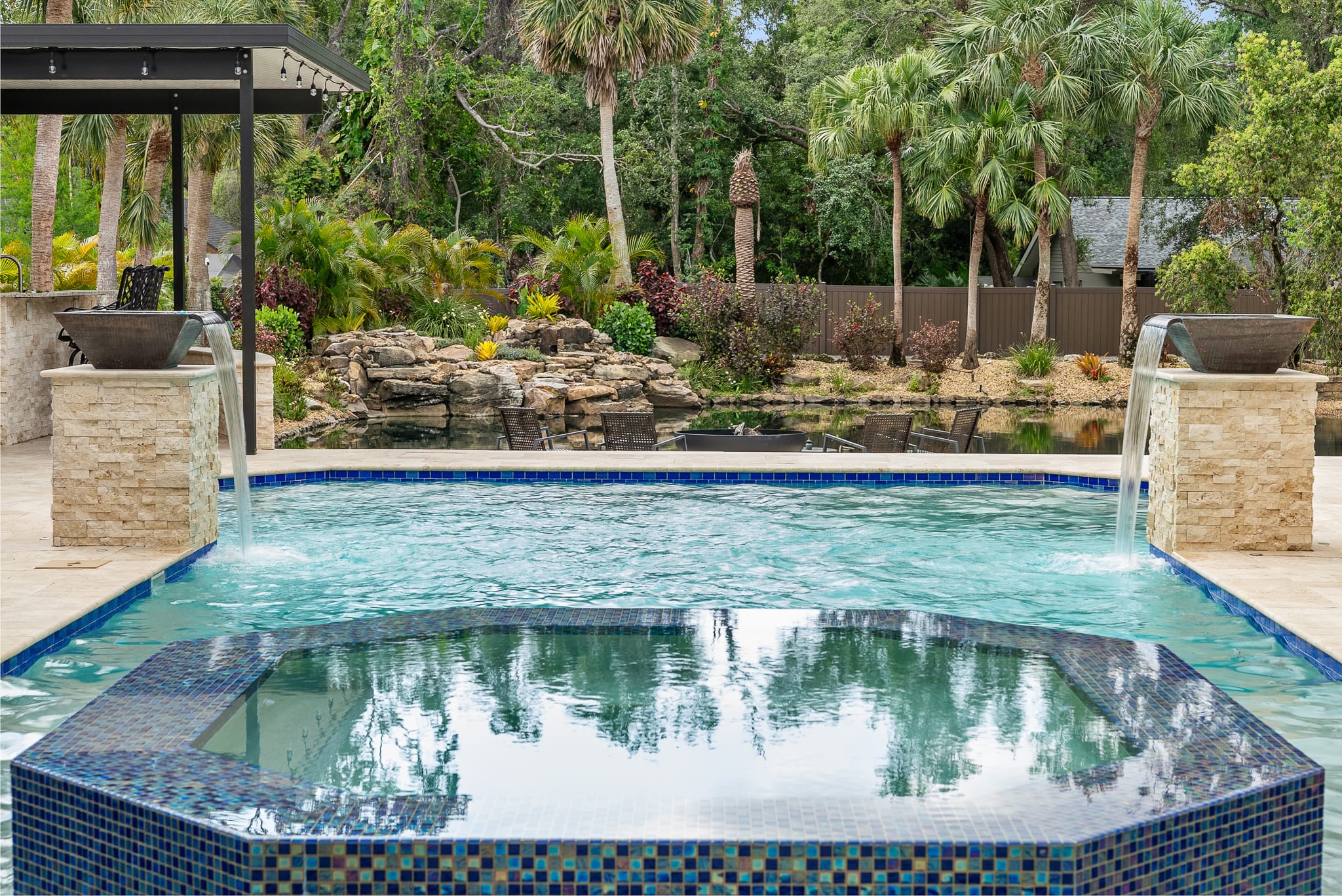
Spas. Sun shelves. Raised walls. Waterfalls. Sheer descents. Bubblers. Fire features. In pool tables. Large steps and benches.
Every one of those features can be great when it serves a purpose in the design.
But they aren't simply visual additions.
Features can require additional concrete, steel, plumbing, pumps, electrical work, gas, automation and labor.
A raised spa isn't just a different shape drawn on a rendering. A large water feature isn't just another plumbing line. The equipment and construction need to support what we've designed.
That's why I like to design the vision first and then make sure everything behind it is engineered and equipped to work correctly.
Decking Is a Major Part of the Budget
The pool shell gets most of the attention, but the amount and type of decking can have a substantial effect on the overall project price.
A project with 600 square feet of deck and one with 1,600 square feet of deck are very different projects even if the swimming pools themselves are the same size.
Material matters too.
Brick pavers, concrete pavers, travertine, marble and porcelain don't have the same material or installation costs. Our guide to choosing decking for your pool walks through how those materials actually behave underfoot.
This is another reason homeowners need to look carefully at proposals.
If you asked for travertine but the base proposal includes brick pavers, the number at the bottom isn't the price of the project you described.
It's the price of a different project.
Drainage Isn't an Optional Afterthought
Florida gets a lot of water.
Where that water goes after we change the backyard matters.
Pool decks, retaining walls, raised areas and changes to existing elevations can all affect drainage.
Some properties require relatively simple solutions. Others require engineered drainage plans or more substantial drainage systems. Grading and stormwater are reviewed as part of the permit, and the City of Tampa's pool and spa permit requirements give a sense of what a jurisdiction asks for.
Those requirements can add cost, but they're not the place I'd recommend trying to save money by pretending the issue doesn't exist.
Water is going somewhere.
A good design accounts for where.
Pool Size Matters, But Not as Much as People Think
Obviously, a larger pool generally requires more excavation, steel, concrete, interior finish and labor.
But increasing the dimensions of the pool doesn't necessarily increase every other cost proportionally.
You still need equipment. You still need plumbing. You still need permitting and engineering. You still need mobilization.
That's why a 400 square foot pool isn't automatically twice the price of a 200 square foot pool, and why a 400 square foot pool on a difficult site can cost substantially more than a larger pool on an easy one.
Square footage is part of the equation.
It's just not the equation.
Why Online Pool Cost Calculators Struggle
This is ultimately the problem with online pool calculators.
They can ask: How long is the pool? How wide? Do you want a spa? What decking do you like?
Those questions are useful.
But the expensive questions are often harder to put into a calculator:
Can we physically build what you designed on this property? What equipment can access the backyard? What's happening with the elevation? Where is the water going? Does soil need to be retained? What does the equipment need to operate all of these features properly?
That's where real pool pricing happens. We went deeper on this in why pool cost calculators are misleading.
So What Should a Pool Cost?
If you have a relatively flat property with good access and you're looking for a straightforward concrete pool, we can build a pool starting around $55,000 in our market today.
But I think it's important to put that number into perspective.
Our average new pool project is approximately $110,000, and we build highly customized outdoor projects that exceed $500,000.
That's a huge range, and there's a reason for it.
A $55,000 pool and a $500,000 project aren't simply different sized versions of the same thing. The property, access, elevation, drainage, retaining requirements, decking, spa, equipment, structural requirements and custom features can make them fundamentally different construction projects.
That's why when someone asks me what a pool costs, I can give them a starting point, but I can't give them an honest answer about their pool until I understand what they want and where we're building it.
For a straightforward project, that conversation may start around $55,000. For our average customer today, the finished project is closer to $110,000. And for homeowners creating a highly customized pool and complete outdoor living environment, the investment can reach several hundred thousand dollars.
The goal isn't to fit every homeowner into the same price point. It's to accurately price the project they want to build.
Frequently Asked Questions About Pool Costs
How much does it cost to build a pool in Tampa Bay?
For a straightforward concrete pool on a relatively flat property with good access, pricing starts around $55,000. Pool Perfection's average new pool project is approximately $110,000, and highly customized outdoor projects can exceed $500,000. The range is wide because the property matters as much as the pool.
Why do two similar looking pools cost different amounts?
Because the construction behind them is different. Site access determines excavator size and labor. Elevation can require retaining walls, footers and engineered structures. Drainage, soil retention and waterfront conditions all add scope that never shows up in a rendering.
Are online pool cost calculators accurate?
They are useful for orientation and little else. A calculator knows the approximate dimensions of your backyard but not what is happening vertically, what equipment can reach the site, where water will go, or whether soil needs to be retained. Those are usually the expensive questions.
Does a bigger pool always cost proportionally more?
No. A larger pool needs more excavation, steel, concrete and interior finish, but equipment, plumbing, permitting, engineering and mobilization do not scale with size. A 400 square foot pool is not automatically twice the price of a 200 square foot pool.
How much can retaining walls add to a pool project?
On properties with significant elevation change, retaining work can add tens of thousands of dollars, and $30,000 or more is not unrealistic. It is not an upgrade. It is the construction required to make the design work on that particular site.
Does decking make a big difference to the price?
Yes. The amount of deck and the material both matter. A project with 600 square feet of deck and one with 1,600 square feet are very different projects even with identical pools, and brick pavers, concrete pavers, travertine, marble and porcelain do not share the same material or installation costs.
Get an Honest Price for Your Pool
The only way to price your pool accurately is to understand what you want and see where we're building it. That's what our design consultation is for.
Talk to a Pool Perfection designer about your property and your project, or call (727) 518-7665. If you'd like to spread the investment out, take a look at financing options first.